



Frozen shoulder can be a frustratingly slow condition. Symptoms may persist for months or even years, and some people continue to experience limitations in shoulder movement after the most painful stages have passed. Recovery also varies considerably from one person to another.
That long and unpredictable course changes the question patients should ask about treatment. Rather than looking for a single therapy that promises to cure frozen shoulder quickly, it is more useful to consider which treatments may reduce pain, improve mobility, and support function as the shoulder recovers.
For patients interested in non-invasive treatment options, StemWave therapy may be one part of that approach. Research on acoustic and shockwave therapies for frozen shoulder is still developing, but some studies have reported improvements in pain and function.
Understanding what frozen shoulder is doing inside the joint, why recovery can take so long, and what different treatments can realistically accomplish makes it easier to build a plan around progress rather than an unrealistic recovery deadline.

Frozen Shoulder Treatment: Understanding the Three Phases First
Frozen shoulder, medically known as adhesive capsulitis, is commonly described as progressing through three phases. These stages can overlap, and their duration varies from person to person.
- Freezing phase: Pain and stiffness gradually increase over several weeks or months.
- Frozen phase: Pain may begin to ease, while stiffness and loss of motion become the primary problems.
- Thawing phase: Shoulder mobility gradually begins to improve.
Recovery of this condition can be slow. According to the American Academy of Orthopaedic Surgeons, frozen shoulder may take up to three years to resolve.
Certain health conditions can also affect a person’s risk. Diabetes has a particularly strong association with frozen shoulder, with estimates suggesting that roughly 10 to 20 percent of people with diabetes may develop the condition. Thyroid disorders are also associated with an increased risk.
Understanding these phases matters because the most appropriate approach can change as pain, stiffness, and mobility change. Treatment during a highly painful freezing phase may look different from rehabilitation later, when stiffness has become the primary limitation.
Why Frozen Shoulder Recovery Takes as Long as It Does
Frozen shoulder recovery can be slow because the condition involves changes within the shoulder capsule, not simply temporary muscle soreness or inflammation. The capsule surrounding the joint can become inflamed, thickened, and increasingly stiff as the condition progresses.
These changes restrict the shoulder’s normal range of motion and can make everyday movements difficult. Because the condition develops over time, restoring comfortable movement can also be gradual. Pain may improve before mobility fully returns, which is one reason someone can feel better while still having significant stiffness.

Who Is More Likely to Develop Frozen Shoulder?
Diabetes is strongly associated with frozen shoulder, but it is not the only recognized risk factor. Thyroid disorders are also associated with increased risk, and frozen shoulder occurs most commonly in adults between ages 40 and 60.
A period of limited shoulder movement can contribute as well. Frozen shoulder may develop after an injury, surgery, or another condition that prevents someone from moving the arm normally for an extended period.
Doctors often distinguish between primary frozen shoulder, which develops without an obvious preceding cause, and secondary frozen shoulder, which occurs in association with an injury, surgery, prolonged immobilization, or another medical condition.
Identifying the circumstances surrounding the onset can help guide treatment and rule out other causes of shoulder pain and restricted motion.
What Research Suggests About Shockwave Therapy for Frozen Shoulder
Extracorporeal shockwave therapy has been studied as a non-invasive treatment option for adhesive capsulitis. Some studies have reported improvements in pain, shoulder function, and range of motion, although treatment methods and results vary across the available research.
One randomized clinical trial comparing shockwave therapy with oral steroid treatment found improvements in both groups. Patients receiving shockwave therapy showed earlier improvements in some measures of shoulder function and range of motion.
Other reviews have also reported promising results for shockwave therapy, particularly when it is used alongside rehabilitation. However, the overall evidence remains limited, and current research does not establish shockwave therapy as a cure for frozen shoulder or show that it reliably shortens the condition’s overall course.
That is important when considering StemWave. The available research does not guarantee that every patient will respond the same way, and studies of other shockwave technologies should not be treated as direct evidence for StemWave itself. Still, for patients looking for a non-invasive option, what research suggests about StemWave therapy can help provide context for discussing whether acoustic wave therapy may have a place in a broader treatment plan.
Shoulder Mobility Exercises: Why Movement Still Matters
Movement and mobility exercises are commonly included in conservative treatment for frozen shoulder. The goal is to maintain and gradually improve shoulder motion without pushing the joint beyond what it can comfortably tolerate at that stage of recovery.
The appropriate intensity can change as frozen shoulder progresses. During the painful freezing phase, exercises often emphasize gentle range of motion rather than aggressive stretching. Pushing too hard when the shoulder is highly irritable may increase pain without providing additional benefit.
As pain decreases and stiffness becomes the more prominent limitation, mobility work may gradually progress. Exercises can focus more specifically on restricted movements and restoring functional range of motion.
The progression should be based on how the shoulder responds rather than a predetermined timeline. A chiropractor, physical therapist, or other qualified provider can help determine which movements are appropriate and when it makes sense to increase their intensity.

Where StemWave Realistically Fits Into a Frozen Shoulder Treatment Plan
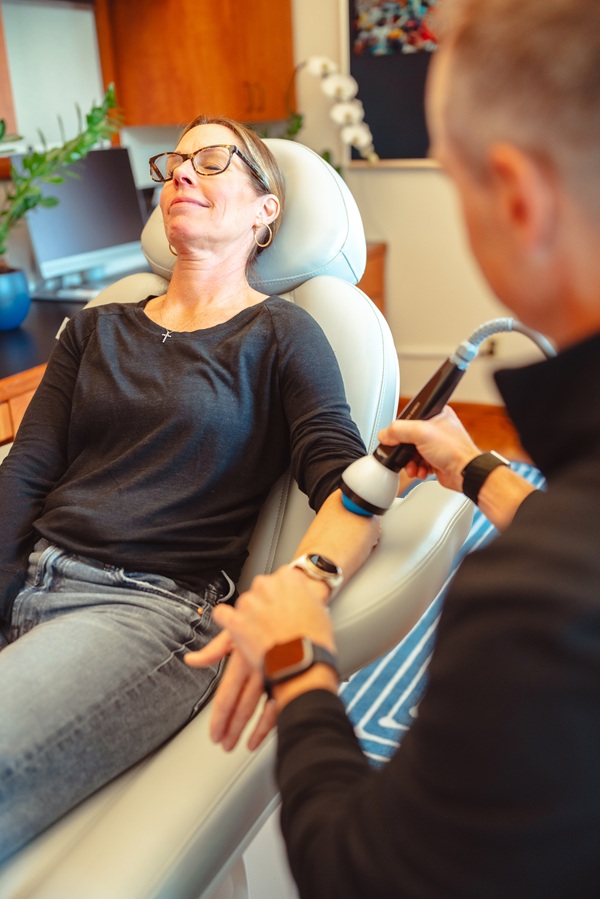
StemWave is best viewed as one potential component of a broader frozen shoulder treatment plan. It does not replace the movement, rehabilitation, and time that recovery may require.
For some patients, StemWave may be considered as a non-invasive option for managing pain and supporting function while mobility work addresses restricted movement. How much benefit someone experiences can vary, which is why treatment should be based on the individual’s symptoms, stage of frozen shoulder, and response over time.
This combined approach also reflects the role of StemWave therapy alongside chiropractic care. Rather than expecting one treatment to resolve every aspect of frozen shoulder, different parts of the plan can address pain, mobility, movement, and function as recovery progresses.
Setting Realistic Expectations for Frozen Shoulder Rehabilitation
Frozen shoulder recovery varies considerably from person to person. Some people regain nearly all of their previous range of motion, while others continue to experience some stiffness or limitation even after pain has substantially improved.
People with diabetes may experience a more prolonged course and can have greater difficulty regaining motion than people without diabetes. Other factors, including the severity of stiffness, the stage of the condition, and underlying health concerns, may also influence recovery.
For that reason, a specific recovery date is difficult to predict. Progress is often better measured by changes in pain, movement, and everyday function than by whether the shoulder has returned to normal within a particular number of weeks or months.
Progress May Look Different at Each Stage
Improvement does not always happen at the same rate throughout frozen shoulder recovery. Pain may decrease before range of motion returns, and some movements may improve faster than others.
Treatment can change along with those symptoms. Mobility work may progress as the shoulder becomes less painful, while non-invasive treatments such as StemWave may be considered for symptom relief as part of the broader plan.
The goal is not to force the shoulder through recovery as quickly as possible. It is to continue making appropriate adjustments based on how pain, mobility, and function are changing.
Focus on Progress Rather Than a Fixed Timeline
Frozen shoulder can be frustrating because improvement often happens gradually. A period of slower progress does not necessarily mean that nothing is changing or that the entire treatment plan needs to be abandoned.
Consistent mobility work, appropriate activity, and treatments aimed at managing symptoms can each have a place in recovery. No single intervention can guarantee how quickly frozen shoulder will improve.
Setting realistic expectations from the beginning allows treatment to focus on meaningful gains in comfort and function rather than chasing an aggressive deadline that may not fit the individual.
Get Help With Persistent Shoulder Pain and Stiffness
If frozen shoulder is making it difficult to reach, dress, sleep comfortably, or use your arm normally, Crystal Springs Chiropractic can help you explore conservative treatment options, including StemWave when appropriate.
Learn More About StemWave