
Support Movement, Stability, and Recovery at Crystal Springs Chiropractic
If pain, muscle strain, or joint instability is limiting your performance or daily activity, sports kinesio tape treatment may provide additional support while you move and recover. At Crystal Springs Chiropractic, kinesio taping is used as part of a personalized approach to care based on your symptoms, movement, and activity goals.
Also known as kinesiology taping, this technique is commonly used by athletes and active individuals. It may also be used for everyday strains, overuse injuries, postural concerns, and other conditions where added muscle or joint support may be helpful.
Support Healing Between Visits
Kinesio tape helps reinforce healthy movement patterns while reducing unnecessary strain on injured muscles and joints.
Personalized for Your Condition
Every application is based on your evaluation, activity level, and treatment goals rather than a standard taping method.
What Is Sports Kinesio Tape Treatment?
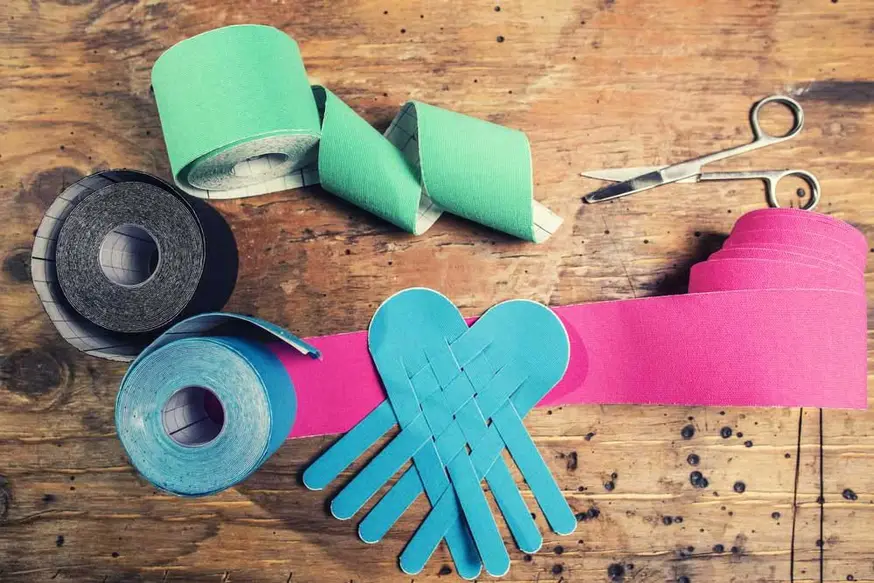
Kinesio tape is a flexible therapeutic tape designed to move with your body. Unlike rigid athletic tape, which is often used to limit movement, kinesio tape can provide support while allowing the joint or muscle to continue moving through its normal range.
Depending on how and where it is applied, kinesio tape may help:
- Provide additional support to injured or overworked tissues
- Reduce strain during certain movements
- Support muscle function during activity or recovery
- Improve awareness of posture and joint positioning
Kinesio taping may be used alongside chiropractic adjustments, soft tissue care, and rehabilitation exercises as part of a broader treatment plan.
Why Use Kinesio Tape With Chiropractic Care?
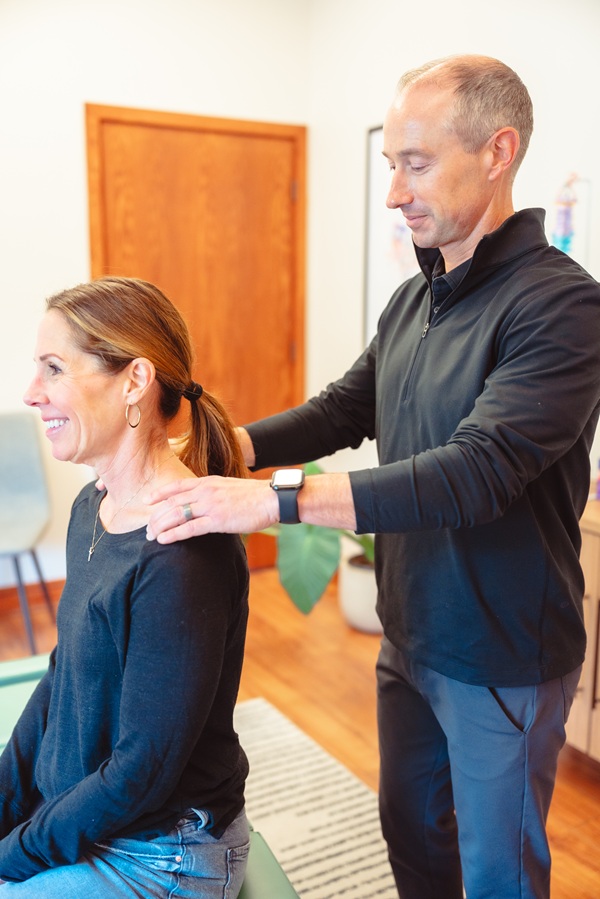
Chiropractic care may improve joint mobility, but muscles and connective tissues can still need time to adjust as movement changes. Soreness, muscle tension, or familiar movement patterns may also continue between appointments.
Kinesio tape can provide additional support during that time without significantly restricting motion. Depending on the area being treated, taping may help reduce strain during certain activities, provide greater awareness of movement, and make everyday activities like walking, lifting, exercising, or sitting at a desk more comfortable.
At Crystal Springs Chiropractic, kinesio taping is used strategically rather than routinely. It may be applied after a chiropractic adjustment, during rehabilitation, or alongside soft tissue therapy when your chiropractor determines that additional support may be useful between visits.
Common Uses for Sports Kinesio Tape
Kinesio taping may be used to provide additional support for areas affected by pain, strain, overuse, or instability. Common applications include:
- Shoulder pain and instability
- Knee pain or support during activity
- Ankle sprains or weakness
- Elbow pain, including tennis or golfer’s elbow
- Lower back or hip discomfort
- Neck pain and postural strain
- Muscle fatigue or overuse injuries
- Sports-related injuries and activity support
Your chiropractor will evaluate the affected area, how you move, and what activities aggravate your symptoms before determining whether kinesio taping is appropriate and how it should be used.
Move With More Confidence
Kinesio tape provides flexible support that moves with your body during work, exercise, and everyday activities.
Part of a Complete Care Plan
Taping is often combined with chiropractic adjustments and rehabilitation to support recovery from multiple angles.
Benefits of Sports Kinesio Tape Treatment

One of the benefits of kinesio tape is that it can provide support without significantly restricting normal movement. Unlike rigid athletic taping methods that are used to limit movement, kinesio tape stretches with the body and can be worn during many everyday activities.
Depending on your condition and how the tape is applied, kinesio taping may:
- Provide lightweight support without significantly restricting range of motion
- Help reduce strain during certain movements and activities
- Encourage better posture and movement awareness
- Provide support during exercise and other physical activities
- Complement chiropractic care, rehabilitation exercises, and soft tissue treatment
Kinesio tape can be particularly useful when additional support is needed without completely limiting activity. Your chiropractor will determine whether taping makes sense based on your symptoms, movement, and treatment goals.
What to Expect During Kinesio Tape Treatment
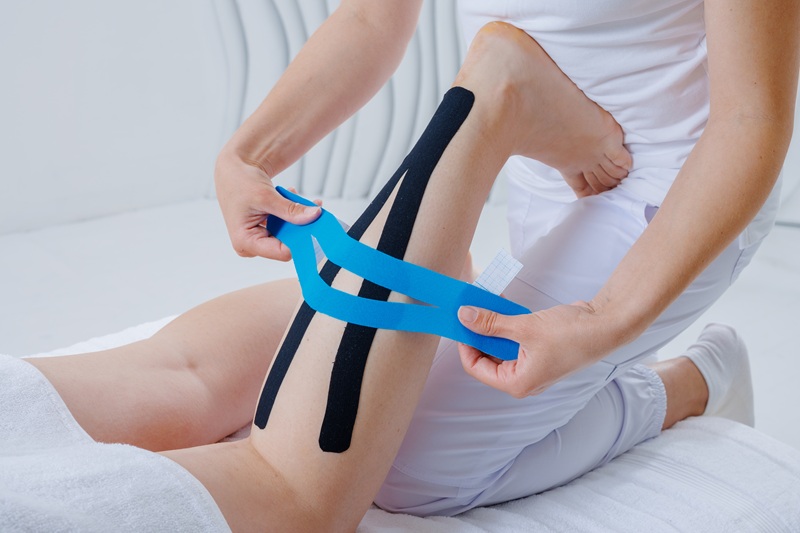
Treatment begins with an evaluation of more than just where you hurt. Your chiropractor will look at posture, joint mobility, muscle function, and the movements or activities that tend to aggravate your symptoms before deciding whether kinesio taping is appropriate.
If taping is recommended, the tape is applied in a pattern based on the area being treated and the type of support needed. The application may vary depending on whether the goal is to support a muscle or joint, reduce strain during movement, improve movement awareness, or provide additional support during recovery.
Kinesio tape can typically remain in place for several days and may be worn during many normal daily activities. Your chiropractor will explain how to care for the tape, when to remove it, what to watch for if your skin becomes irritated, and whether additional taping may be useful as your treatment progresses.
Is Sports Kinesio Tape Right for You?
Kinesio tape may be recommended if you:
- Have muscle or joint strain that may benefit from additional support
- Want added support during physical activity
- Are recovering from a sports or overuse injury
- Need postural or movement support between visits
Kinesio taping isn’t appropriate for every condition or every patient. An in-office evaluation allows your chiropractor to assess your symptoms and movement before determining whether taping may be useful as part of your treatment plan.
Why Choose Crystal Springs Chiropractic in San Mateo?

Crystal Springs Chiropractic takes a movement-focused, patient-centered approach to care. Rather than relying on a single technique, we evaluate how your joints, muscles, and movement patterns may be contributing to your symptoms.
Kinesio taping is used when it has a specific purpose within that plan. Depending on your needs, it may be combined with chiropractic adjustments, soft tissue therapies, and rehabilitation exercises to provide additional support as you work toward more comfortable, confident movement.
Schedule Sports Kinesio Tape Treatment in San Mateo
If pain, strain, or an injury is affecting how you move, Crystal Springs Chiropractic can determine whether kinesio taping may be a useful part of your care. We’ll evaluate the affected area, discuss your symptoms and activity goals, and recommend a treatment approach based on what we find.
Contact Crystal Springs Chiropractic today to schedule your appointment in San Mateo.
Find the Right Support
Not every injury requires taping, but the right application can make movement more comfortable during recovery.
Start With an Evaluation
Schedule an appointment to learn whether kinesio taping is a good fit for your condition and treatment plan.
Sports Kinesio Tape FAQs
Does kinesio tape restrict movement?
No. Kinesio tape is flexible and designed to provide support without significantly restricting normal movement or range of motion.
How long does kinesio tape stay on?
Kinesio tape can typically remain in place for several days. The exact length depends on where it is applied, your activity level, skin tolerance, and how well the tape adheres. Your chiropractor will explain when to remove it based on your treatment and the area being taped.
Can kinesio tape be used during sports or workouts?
Yes. Kinesio tape can be worn during many sports, workouts, and other physical activities because it provides support while allowing movement. Your chiropractor can advise you on activity based on your injury, symptoms, and treatment plan.
Is kinesio taping painful?
Kinesio tape application is typically painless. The tape is lightweight and flexible, although some people may experience skin irritation or sensitivity to the adhesive.
What should I do if kinesio tape irritates my skin?
Remove the tape if you develop persistent itching, burning, redness, blistering, or other skin irritation. Let your chiropractor know about the reaction before the tape is reapplied.
Is kinesio tape a replacement for chiropractic care?
No. Kinesio tape is generally used as a supportive treatment rather than a replacement for chiropractic care. At Crystal Springs Chiropractic, taping may be incorporated into a broader treatment plan based on your symptoms, movement, and individual needs.