



Jobs that require frequent overhead reaching can place significant demands on the shoulder. Painters, electricians, warehouse workers, construction workers, and others who regularly work with their arms elevated may face a greater risk of developing rotator cuff problems over time.
A study examining occupational overhead work found an association between cumulative overhead exposure and rotator cuff tendon abnormalities. Rather than developing after one identifiable injury, symptoms can emerge gradually after months or years of repetitive shoulder loading.
That matters when considering treatment. Rotator cuff tendinopathy develops over time and is different from an acute, full-thickness rotator cuff tear. Although both can cause shoulder pain and weakness, they may require different approaches to evaluation and treatment.
For some people with chronic shoulder pain related to tendinopathy, StemWave therapy may be considered as a non-invasive treatment option. However, persistent shoulder pain should be properly evaluated first, particularly when there is significant weakness, loss of motion, or a recent injury that could indicate a more substantial rotator cuff injury.
Chronic Shoulder Pain Treatment: Tendinopathy vs. a Torn Rotator Cuff
Rotator cuff tendinopathy involves changes within one or more of the tendons that help stabilize and move the shoulder. Symptoms often develop gradually and may be associated with repetitive loading, particularly in people who frequently work with their arms overhead.
A full-thickness rotator cuff tear is structurally different. In this case, the tendon is torn completely through its thickness. Tears can occur suddenly after an injury, such as a fall, or develop gradually as age-related and degenerative changes affect the tendon over time.
The two conditions can produce similar symptoms, including shoulder pain, weakness, and difficulty with overhead movement. A clinical evaluation can help determine the likely cause based on symptoms, strength, range of motion, and how the injury developed. Ultrasound or MRI may also be recommended when a tear is suspected or when imaging would affect the treatment plan.
Getting the diagnosis right matters because treatment for chronic tendinopathy may look very different from the care needed for a significant rotator cuff tear.
Shoulder Pain From Overhead Work: Why Certain Jobs Carry Higher Risk

Repeated overhead work can place substantial demands on the muscles and tendons that stabilize and move the shoulder. The risk can increase when overhead reaching is combined with lifting, forceful movements, awkward positions, or long periods without adequate recovery.
Some jobs create these demands in different ways:
- Construction workers and electricians: Repeatedly reach overhead while using tools, handling materials, or working in elevated positions.
- Painters: May spend extended periods with one or both arms elevated while performing repetitive movements.
- Warehouse and logistics workers: Often combine reaching with lifting, carrying, stacking, or moving objects at or above shoulder height.
- Healthcare workers: Patient transfers, repositioning, and other physical tasks can place the shoulder under load, sometimes in awkward or unpredictable positions.
Unlike an acute shoulder injury that occurs during a single event, problems associated with repetitive overhead work may develop gradually. A worker may initially notice soreness after a shift before pain becomes more frequent or begins interfering with reaching, lifting, sleeping, or other daily activities.
Over time, repeated loading without enough recovery can contribute to persistent shoulder symptoms and rotator cuff problems, particularly when the same movements are performed day after day.
What Happens Inside the Tendon With Repetitive Overhead Motion
Rotator cuff tendons are designed to tolerate repeated loading, but problems can develop when the demands placed on them consistently exceed their ability to adapt and recover. This can happen with frequent overhead work, particularly when reaching is combined with lifting or forceful movements.
Over time, tendinopathy can involve several changes within the tendon, including altered collagen organization and changes in the cells and tissue surrounding the collagen. These changes can affect how the tendon responds to load and may contribute to persistent pain and reduced shoulder function.
This is more complex than a fresh muscle strain or other acute injury. Chronic tendon pain is not simply the result of ongoing inflammation, which helps explain why rest or anti-inflammatory approaches alone may not address every factor contributing to persistent symptoms.
Managing chronic rotator cuff tendinopathy therefore often involves gradually improving the shoulder’s ability to tolerate activity rather than simply avoiding movement until the pain disappears.
Calcific vs. Non-Calcific Tendinopathy
Not all rotator cuff tendinopathy looks the same. Calcific tendinopathy involves calcium deposits within a rotator cuff tendon, while non-calcific tendinopathy does not.
This matters when looking at shockwave research. Evidence is generally stronger for extracorporeal shockwave therapy in calcific rotator cuff tendinopathy, while findings for non-calcific tendinopathy are more mixed.
Knowing which type of shoulder problem is present can therefore help guide treatment decisions. Imaging may be useful when calcific deposits or a more significant rotator cuff injury are suspected.
How StemWave May Help With Chronic Shoulder Pain
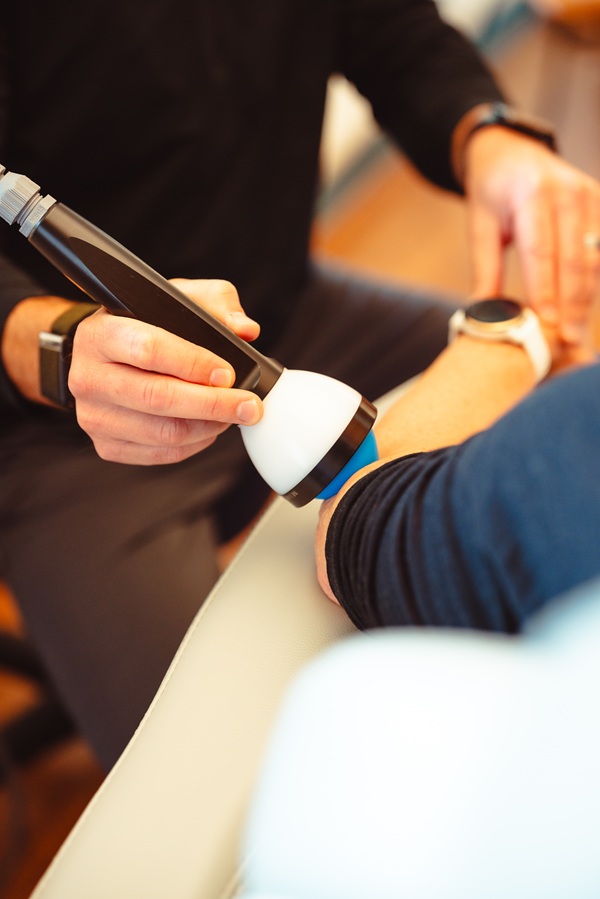
StemWave uses acoustic waves delivered through the skin to stimulate a response in the treatment area. For someone with chronic shoulder pain related to rotator cuff tendinopathy, it may be considered a non-invasive option for reducing pain and improving function.
Research involving other shockwave technologies has also examined their effects on calcium deposits in calcific tendinopathy. However, those findings should not automatically be applied to StemWave because acoustic and shockwave devices can differ in how they generate and deliver energy. Our guide to the differences between radial and shockwave therapy explains why the type of technology matters when interpreting this research.
StemWave sessions are brief and do not involve injections or surgery. Treatment response varies, and whether it is appropriate depends on what is causing the shoulder pain and the individual’s overall treatment plan.
Why Work-Related Shoulder Pain Can Keep Coming Back
Improving shoulder pain does not necessarily mean the shoulder is ready for the same workload that contributed to the problem. Someone may feel better after resting for a few days or reducing overhead activity, only for symptoms to return when normal job demands resume.
For workers who cannot simply avoid overhead tasks, recovery may involve gradually rebuilding the shoulder’s ability to tolerate those demands. Strengthening exercises can target the rotator cuff and muscles that control the shoulder blade, while changes to workload may reduce repetitive stress during recovery.
Depending on the job, practical adjustments might include:
- Changing the height or position of a work surface
- Reducing prolonged periods of overhead reaching when possible
- Rotating between tasks that place different demands on the shoulder
- Using equipment or positioning that reduces unnecessary reaching
- Allowing recovery time between repetitive or physically demanding tasks
These changes will not be possible in every workplace. The larger goal is to consider what the shoulder repeatedly has to do during a normal workday rather than focusing only on what makes it hurt during treatment.
When Persistent Shoulder Pain Needs a Closer Look
Shoulder pain that develops gradually can be easy to dismiss as soreness from a physically demanding job. Persistent or worsening symptoms, however, may warrant an evaluation to determine whether the problem involves rotator cuff tendinopathy, calcific deposits, a tear, or another shoulder condition.
Evaluation becomes particularly important when pain is accompanied by significant weakness, difficulty raising the arm, substantial loss of motion, or symptoms that began after a fall or other acute injury. These findings can change which treatments are appropriate.
For chronic tendinopathy, recovery often requires more than temporarily reducing pain. The shoulder also has to regain enough strength and tolerance to handle the demands it will face when regular work resumes.
Your Shoulder Still Has to Work After Treatment
If overhead work keeps aggravating your shoulder, Crystal Springs Chiropractic can evaluate your symptoms and discuss whether StemWave and conservative care may help you return to normal activity.
Contact Crystal Springs