


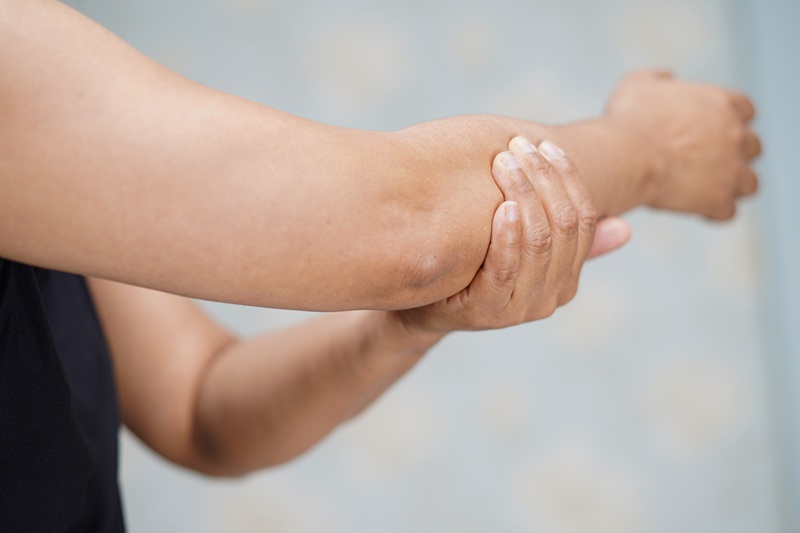

Cortisone injections can provide relatively fast relief for tennis elbow, but faster improvement does not necessarily mean better results over time. A 2024 systematic review and meta-analysis comparing corticosteroid injections with extracorporeal shockwave therapy found that injections performed better at one month, while shockwave therapy produced better pain and functional outcomes at later follow-ups.
That pattern is important for anyone comparing tennis elbow treatments. Short-term pain relief and longer-term improvement are not always the same thing, and the treatments used for lateral elbow pain work in different ways.
For people considering non-invasive options such as StemWave therapy, understanding what is happening within the tendon can help explain how acoustic wave therapy differs from a corticosteroid injection and why treatment decisions should consider more than immediate pain relief.
Tennis Elbow Treatment: Why It Is More Than an Inflammatory Problem
Tennis elbow is commonly called lateral epicondylitis, but lateral elbow tendinopathy is a more accurate term for many cases. The older name suggests that inflammation is the primary problem, while research shows that persistent tennis elbow involves more complex changes within the tendon.
Chronic cases can involve changes in collagen organization, tendon structure, blood vessels, and chemical signaling within the tissue. Inflammation may still play a role, particularly at certain stages, but it does not fully explain why symptoms persist.
This helps explain why tennis elbow treatment cannot focus solely on reducing inflammation. The condition also involves how the tendon responds to repeated gripping, lifting, and other activities that load the muscles and tendons along the outside of the elbow.
What Cortisone Does for Tennis Elbow
Corticosteroid injections can provide relatively fast pain relief by reducing inflammatory activity in the treatment area. For tennis elbow, however, reducing pain quickly does not necessarily mean the tendon will continue improving over time.
As the 2024 meta-analysis discussed earlier found, corticosteroid injections produced better short-term results, while extracorporeal shockwave therapy showed greater benefits at later follow-ups. This suggests that patients comparing treatment options should consider both immediate pain relief and how those results may hold up over time.
For patients interested in a non-invasive approach, StemWave offers an acoustic wave treatment that does not require an injection or medication. Research on related shockwave therapies suggests potential longer-term benefits for tennis elbow, although individual results vary and ESWT research should not be interpreted as direct evidence for the StemWave device itself.
Why Repetitive Loading Matters With Tennis Elbow
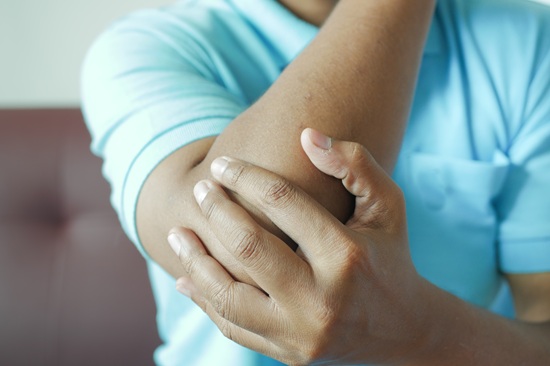
Tennis elbow often develops after repeated or forceful use of the muscles and tendons that extend the wrist and stabilize the forearm. Racquet sports can cause this pattern, but so can manual work, frequent lifting, gripping tools, and other repetitive hand and wrist movements.
When these demands repeatedly exceed what the tendon can comfortably tolerate, changes can develop within the tendon over time. Pain may initially appear only during certain activities before becoming more persistent or interfering with everyday tasks such as gripping, lifting, or carrying objects.
This is why reducing pain is only one part of managing persistent tennis elbow. The tendon also needs to regain the ability to tolerate the activities that repeatedly place it under load.
How StemWave Approaches Tennis Elbow Differently
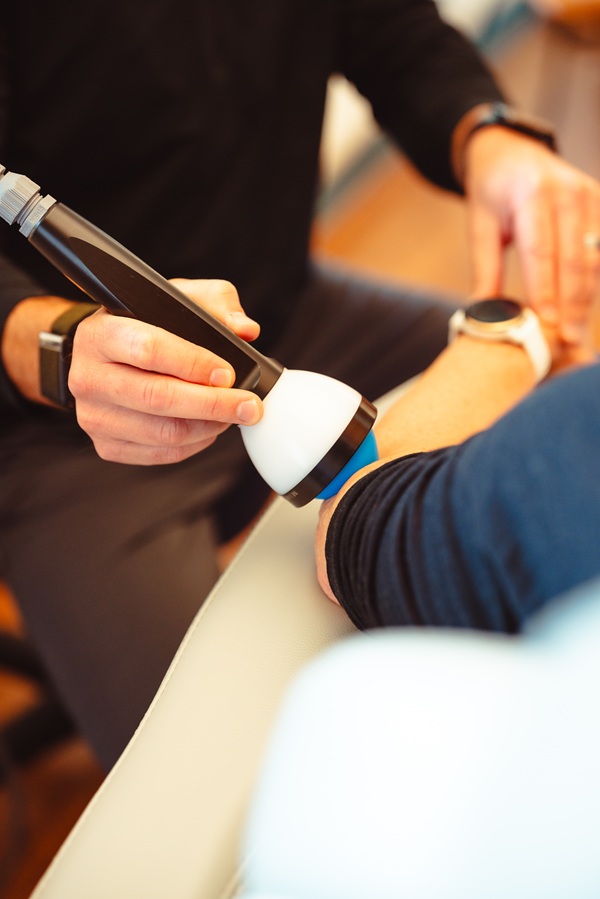
Corticosteroid injections and StemWave approach tennis elbow in different ways. Corticosteroids involve injecting medication into the treatment area to reduce inflammatory activity and symptoms. StemWave therapy instead uses acoustic waves delivered through the skin without medication or an injection.
Research involving extracorporeal shockwave therapy suggests that acoustic and shockwave treatments may help reduce pain and improve function in some people with lateral elbow tendinopathy. Proposed biological effects include changes in local signaling and tissue response, although the exact mechanisms and their relationship to clinical improvement are still being studied.
For patients comparing the two approaches, one of the clearest practical differences is that StemWave provides a non-invasive, non-injection option. Individual response varies, and the available ESWT research should not be treated as evidence that every patient will experience the same results with StemWave.
Why Exercise Still Matters During Tennis Elbow Treatment
Exercise is also an important part of conservative care for persistent tennis elbow. Rather than relying exclusively on eccentric exercises, rehabilitation may use progressive strengthening to gradually increase the forearm muscles’ and tendons’ ability to tolerate load.
The appropriate exercises and resistance depend on the person’s symptoms and the activities they need to return to. Someone who regularly uses hand tools may need to rebuild different capacities than someone whose symptoms developed through racquet sports.
StemWave may be considered alongside this type of rehabilitation rather than as a replacement for it. Acoustic wave treatment may help with pain and function, while progressive exercise focuses on rebuilding the elbow’s tolerance for the gripping, lifting, and repetitive movements that continue after treatment ends.
Why Tennis Elbow Recovery Takes Time
Tennis elbow often improves gradually rather than disappearing after a few treatments. Many cases improve over several months, although symptoms can persist for a year or longer in some people.
Recovery can also be uneven. Someone may notice less pain during everyday activities while still having symptoms with heavier gripping, lifting, or repetitive work. Returning immediately to the same level of activity that aggravates the elbow can make those improvements difficult to maintain.
This is why treatment should consider both symptom relief and the elbow’s ability to tolerate increasing levels of activity. StemWave, progressive strengthening, activity modification, and other conservative treatments may each have a role depending on the individual.
When Persistent Tennis Elbow Needs Evaluation
Elbow pain that continues despite changes in activity and conservative care deserves a closer look. Not every case of pain on the outside of the elbow is lateral elbow tendinopathy, and other conditions can produce similar symptoms.
Evaluation becomes particularly important when pain follows an acute injury or occurs with significant weakness, numbness, tingling, or substantial loss of function. These symptoms may point to a different problem that requires another treatment approach.
For persistent tennis elbow, the goal is not simply to find whichever treatment reduces pain the fastest. It is to find an approach that improves symptoms while helping the elbow tolerate the work, sports, and everyday activities the patient needs to return to.
Explore a Non-Injection Option for Persistent Tennis Elbow
If elbow pain keeps interfering with gripping, lifting, work, or sports, Crystal Springs Chiropractic can evaluate your symptoms and discuss whether StemWave belongs in your conservative treatment plan.
Get Started With StemWave