


Achilles pain can improve with rest, only to return once you start running or increase your activity again. You may feel fine during everyday movement, then notice the familiar tightness or soreness during a workout. For runners and active adults, that cycle can make it difficult to know when the tendon is actually ready for more.
Part of the challenge is that the Achilles tendon has a limited blood supply compared with many other tissues. Rest can reduce the strain placed on it, but it may not address the factors contributing to persistent tendon pain. When symptoms keep returning, treatments such as StemWave therapy may be used to support circulation and the tissue repair process.
Why Achilles Tendon Pain Often Doesn’t Resolve With Rest Alone
Part of the reason Achilles tendon pain lingers longer than other injuries comes down to blood supply. The middle portion of the tendon, roughly two to six centimeters above the heel bone, is known as the watershed zone. It relies on a single artery for circulation, unlike the sections above and below it, which draw blood from two.
That thinner blood supply means fewer of the nutrients and repair cells your body needs to rebuild damaged tendon tissue reach the area efficiently. Rest removes the stress that could cause further damage, but it does not address the limited blood flow that can make Achilles tendon healing slower. This may be part of why so many people feel better after a few weeks off, only to have symptoms return once activity resumes.
What Chronic Achilles Tendon Pain Usually Means
Chronic Achilles tendon pain often develops gradually rather than following one obvious injury. Runners may first notice discomfort after increasing mileage or adding more demanding workouts.
Common symptoms include:
- A dull ache that feels worse first thing in the morning
- Stiffness after sitting or other periods of rest
- Pain that returns during or after running
- Mild swelling or thickening along the tendon
- Tenderness at the back of the ankle
These symptoms can be associated with Achilles tendinopathy. Repeated overload can change the tendon’s collagen structure and make it less tolerant of activity. Similar overuse patterns can also contribute to chronic knee pain, particularly when running or training demands increase.
Rest may calm the symptoms by reducing that stress. However, returning to the same activity can bring the pain back if the tendon is still struggling with the demands placed on it.
What Research Shows About Different Types of Achilles Pain
Where Achilles pain occurs can matter when considering treatment. Insertional tendinopathy affects the area where the tendon attaches to the heel bone. Midportion tendinopathy causes pain several centimeters higher along the tendon. These two conditions do not always respond to treatment in the same way.
That distinction is important when looking at the research on shockwave therapy. Evidence has generally been more favorable for midportion Achilles tendinopathy, while results for insertional tendinopathy have been more mixed.
Chronic Achilles tendinopathy can also be persistent. Between 25 and 60 percent of people with the condition report symptoms lasting five to ten years. A systematic review of randomized trials found that shockwave therapy improved pain and function for at least three months in people with midportion Achilles tendinopathy. Results were comparable to eccentric strengthening and better than a wait-and-see approach.
These findings do not mean everyone will respond the same way. How long the pain has been present, where it occurs along the tendon, and what treatments you have already tried can all influence the approach that makes sense.
What a Treatment Plan Might Involve
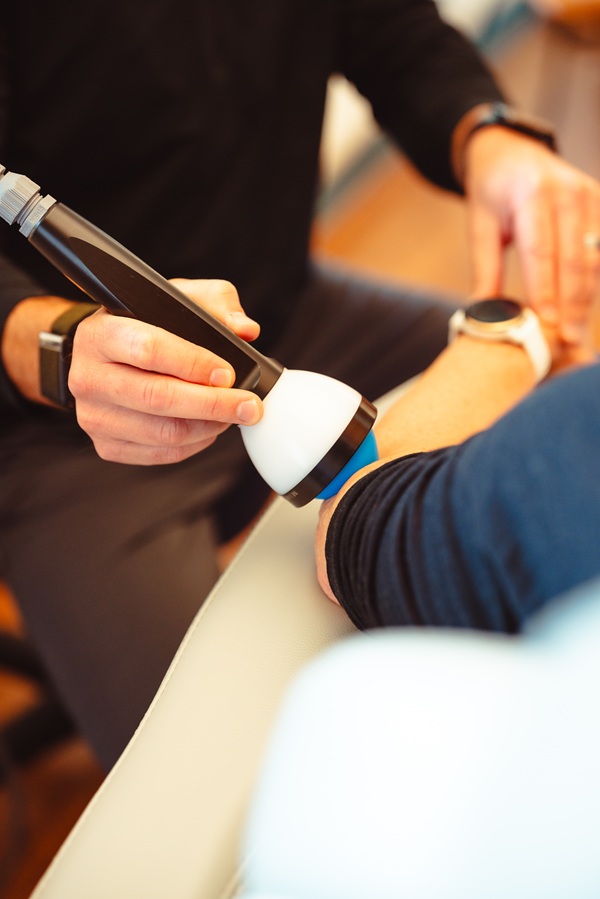
Shockwave therapy for Achilles tendon pain typically involves a handheld applicator delivering focused acoustic pulses directly to the affected section of the tendon. Sessions are usually short, often 10 to 20 minutes, and most people return to normal daily activity right after.
- An initial evaluation to confirm where along the tendon the pain originates
- A series of sessions, often spaced about a week apart, over several weeks
- Guidance on activity modification during the early part of treatment
- Reassessment to track pain and function as sessions continue
Treatment is frequently combined with a structured loading program, such as eccentric calf exercises, rather than used as a standalone fix. Tendons generally respond better to a combination of therapies than to any single intervention on its own.
For runners, the timeline for returning to full training is worth setting expectations around early. Most treatment plans build in a gradual return to activity rather than a fixed date, since resuming mileage too quickly is often what caused the original problem. Your response to the first few sessions typically informs how that return gets paced.
When Achilles Pain Keeps Coming Back
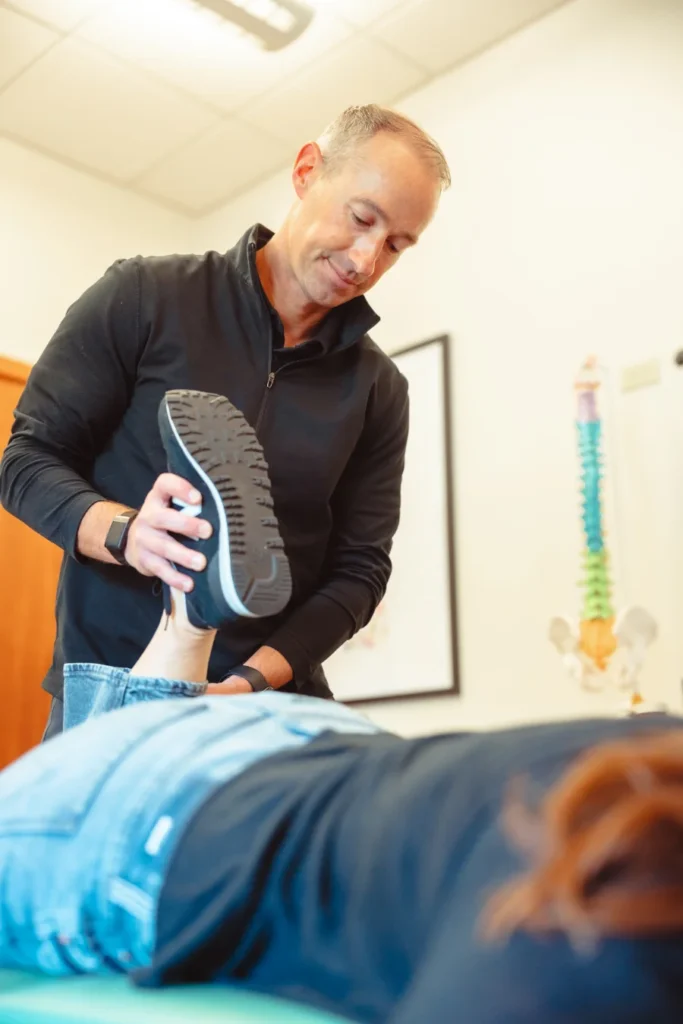
Rest can be useful when an irritated Achilles tendon needs a break from repetitive stress. The problem is when the pain improves during that break and returns once you start running or increasing activity again. At that point, repeatedly resting and restarting may not address what is keeping the tendon irritated.
The tendon itself is only part of the picture. Calf tightness, limited ankle mobility, and changes in how you move can continue placing stress on the Achilles. Previous procedures may also affect movement, especially when lingering scar tissue after surgery contributes to stiffness or reduced mobility.
How long your symptoms have lasted also matters. So does whether the pain is near the heel or higher along the tendon. Looking at those details can help determine why previous approaches have not provided lasting improvement.
Persistent Achilles pain does not mean you have to stop being active indefinitely. It also does not mean a more invasive treatment is automatically the next step. Crystal Springs Chiropractic can evaluate what may be contributing to your symptoms and discuss options for getting you moving more comfortably again.
If appropriate, StemWave therapy may be incorporated into your treatment plan to support circulation and tissue remodeling. The goal is not simply to quiet the pain temporarily. It is to address the factors that continue interfering with your activity and recovery.
Ready to Get Back to Activity Without the Same Achilles Pain?
If your Achilles feels better during rest but hurts again when you run or exercise, it may be time to look at why. Crystal Springs Chiropractic can evaluate the tendon and discuss whether StemWave may fit into your treatment plan.
Schedule an Appointment