


For years, iliotibial band syndrome was commonly described as IT band friction syndrome. The prevailing explanation was that the band repeatedly moved across the outside of the knee during each stride. Anatomical and imaging research challenged that model, showing that the IT band is firmly anchored to the femur rather than freely sliding back and forth over the bone.
That difference matters for runners who rest until the pain improves, return to training, and find that the same lateral knee pain comes back. If repetitive compression and training-related factors are contributing to the problem, simply waiting for the irritation to settle may not address why symptoms developed in the first place.
For runners dealing with recurring IT band pain, StemWave therapy may be one part of a broader treatment plan that also considers training load, strength, and running mechanics. Understanding what is contributing to the irritation can help shift the focus from repeatedly calming a flare-up to addressing the factors that may be keeping it in the cycle.
Why “Friction” Was the Wrong Word for IT Band Pain
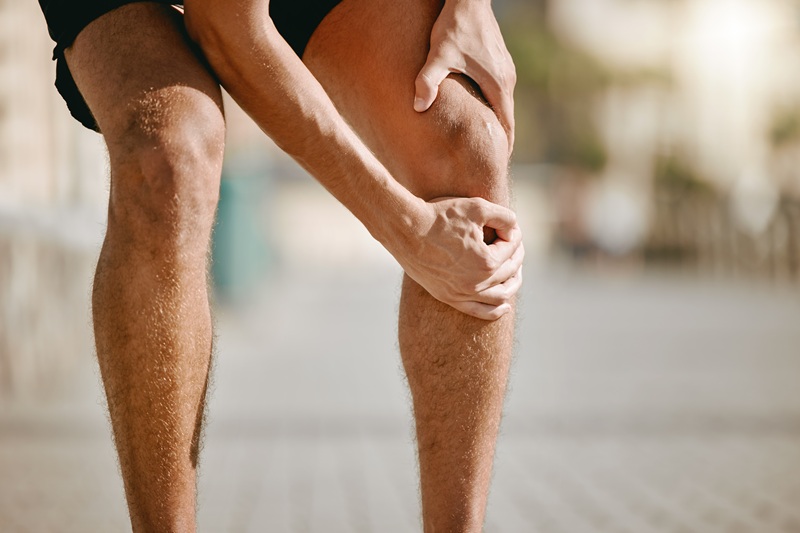
Research led by Fairclough and colleagues challenged the traditional idea that the iliotibial band repeatedly slides across the lateral femoral epicondyle. The IT band is firmly attached to the femur, making the back-and-forth friction described in older explanations unlikely.
One leading explanation instead involves compression of highly vascular and innervated tissue beneath the IT band. This compression occurs as the knee moves through roughly 20 to 30 degrees of flexion, a range runners repeatedly pass through during each stride.
That changes how IT band pain is understood. Rather than a loose band repeatedly rubbing over bone, symptoms may involve sensitive tissue being repeatedly compressed as the knee moves under load.
Why Rest Alone Often Doesn’t Fix Recurring IT Band Syndrome
Rest can be useful during an IT band flare-up because reducing running temporarily decreases the repetitive load placed on irritated tissue. As that load decreases, pain may improve or disappear.
The problem is that rest alone does not necessarily change the factors that contributed to the irritation. Training volume, sudden increases in mileage, running mechanics, strength, and recovery can still be present when a runner returns to the road or trail.
If someone resumes the same training volume or movement patterns immediately after the pain subsides, symptoms may return because the area is again exposed to the loads that previously aggravated it.
That is why recurring IT band syndrome often requires looking beyond the current flare-up. Reducing pain is one part of recovery. Identifying and modifying the factors that repeatedly overload the area can be just as important for a successful return to running.
What Actually Drives IT Band Pain in Runners

IT band pain in runners is generally associated with a combination of training and biomechanical factors rather than one identifiable cause. Factors that may contribute include:
- Hip abductor weakness or altered hip control during running, which may affect how forces are distributed through the hip and lateral knee
- Rapid increases in training volume or intensity without enough time for the body to adapt
- Running repeatedly on banked or crowned surfaces, which can create uneven loading between the legs
- Downhill running, which changes knee mechanics and can increase loading through the lateral knee
The relationship between hip strength and IT band syndrome is still being studied. Some research has identified differences in hip abductor strength or running mechanics among runners with IT band syndrome, while other studies have not found the same associations.
What is clearer is that IT band syndrome is rarely explained by the band simply being “too tight.” Training load, running mechanics, strength, recovery, and individual anatomy can all contribute to how much stress the lateral knee experiences.
Breaking the Cycle: Why Chronic IT Band Pain Needs More Than Stretching
Stretching is one of the most common recommendations runners hear for IT band pain, but the anatomy helps explain why stretching the band itself may have limitations.
The IT band is a thick band of connective tissue that is firmly attached along the outside of the thigh. Unlike a muscle, it is not designed to lengthen substantially during a traditional stretch.
That does not mean stretching has no place in a runner’s recovery plan. Stretching surrounding muscles may help with mobility when appropriate, but repeatedly trying to “loosen” the IT band does not necessarily address the factors contributing to lateral knee pain.
For runners whose symptoms keep returning despite months of stretching, the problem may not be that they are stretching incorrectly. It may be a sign that training load, strength, running mechanics, or the irritated tissues around the lateral knee deserve more attention.
How StemWave May Help With IT Band Pain
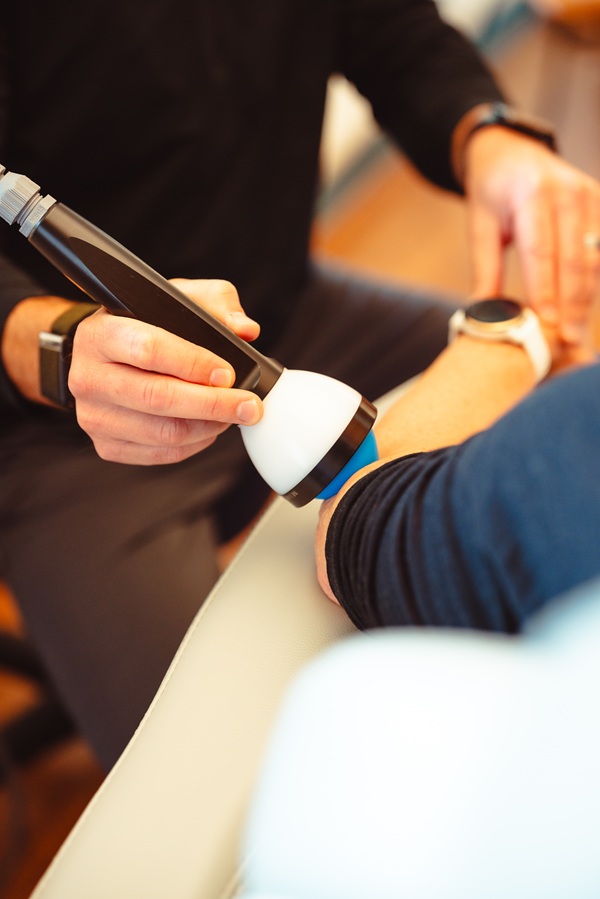
StemWave uses acoustic waves delivered through the skin to stimulate a biological response in the treatment area. For runners with IT band pain, treatment can be directed toward areas of tenderness and irritation around the lateral knee.
Research on shockwave therapy has shown potential benefits for pain and function across several musculoskeletal conditions. A review published in the Journal of Orthopaedic Surgery and Research found improvements in pain and function following extracorporeal shockwave therapy for several soft-tissue and musculoskeletal conditions.
Research specific to IT band syndrome is more limited, but clinical studies have also reported improvements following shockwave therapy. These findings support its potential role as one component of a broader conservative treatment plan rather than as a standalone solution for the factors contributing to IT band pain.
StemWave sessions are relatively brief and do not require injections or surgery. Treatment plans vary depending on the individual, and improvement may occur gradually across multiple sessions rather than immediately after the first treatment.
For runners considering this approach, understanding what research suggests about StemWave therapy effectiveness can also help set realistic expectations about treatment and recovery.
Where StemWave Fits Into a Runner’s Broader Recovery Plan
StemWave may help address pain and irritation around the lateral knee, but treatment is only one part of managing recurring IT band symptoms. Training habits and movement patterns may also need attention before a runner returns to full mileage.
That can include evaluating recent changes in training volume, hip strength and control, running mechanics, recovery, and the surfaces a runner regularly trains on. Which factors matter most will vary from one runner to another.
This broader approach is also why StemWave therapy may be combined with chiropractic care rather than used in isolation. Treatment can focus on the painful area while the broader recovery plan addresses strength, mobility, movement, and training factors that may be contributing to repeated irritation.
For runners who have already gone through several cycles of rest and recurring pain, looking at both sides of the problem can be more useful than repeatedly treating the latest flare-up.
Preventing IT Band Syndrome From Coming Back
Preventing another flare-up often means returning to running gradually rather than jumping immediately back to the mileage or intensity that preceded the injury. The goal is to give the knee time to tolerate increasing loads while also addressing factors that may have contributed to the original symptoms.
Strengthening exercises may focus on the hip abductors and other muscles involved in controlling the hip, pelvis, and knee during running. Training surfaces, downhill mileage, recent changes in intensity, and recovery time may also deserve attention depending on the runner.
Build Mileage Back Gradually
A gradual return usually begins below the runner’s previous training volume and progresses as symptoms allow. Rather than returning to a prior schedule based on a fixed date, runners can use pain and other symptoms as feedback about how well the knee is tolerating increased activity.
If lateral knee pain returns as mileage increases, that does not necessarily mean treatment has failed. It may indicate that the current training load is exceeding what the area can tolerate or that another contributing factor still needs attention.
Look Beyond the Latest Flare-Up
Recurring IT band pain can be frustrating, especially when rest provides temporary relief only for symptoms to return after training resumes. Understanding the possible roles of tissue irritation, training load, strength, and running mechanics provides a more useful framework than assuming the IT band simply needs more stretching.
For runners who have already repeated the cycle of pain, rest, and return to running, the next step may be a more complete evaluation of what is contributing to the problem. From there, treatment and training changes can be based on the runner’s specific symptoms and contributing factors rather than repeating the same approach after every flare-up.
Stop Letting the Same IT Band Pain Interrupt Your Runs
If recurring outer-knee pain keeps returning when you increase your mileage, Crystal Springs Chiropractic can evaluate what may be contributing and whether StemWave fits into your treatment plan.
Schedule an Appointment