



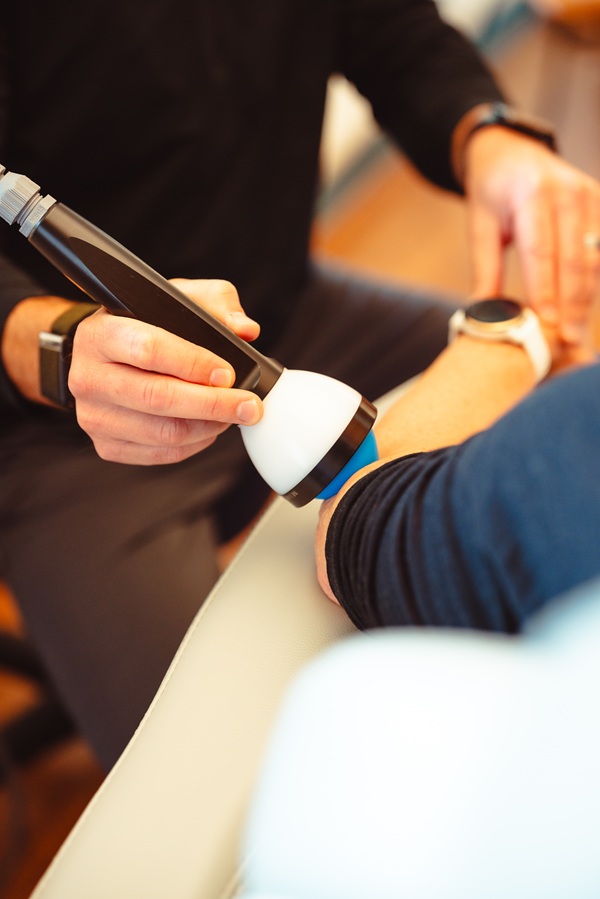
“How many StemWave sessions will I need?” is one of the first questions patients ask when considering treatment. There is no single number that applies to every person or every condition, but most treatment plans involve a series of sessions rather than a one-time visit.
The number of StemWave therapy sessions recommended can depend on the condition being treated, how long symptoms have been present, and how the patient responds as treatment progresses. Published protocols for related acoustic and shockwave therapies also vary depending on the condition and technology being studied.
That means two people with similar pain may not follow identical treatment schedules. Understanding what influences the number and frequency of sessions can provide a more useful expectation than treating any average as a fixed requirement.

Is There an Average Number of StemWave Sessions?
StemWave describes an average care plan as approximately 8 to 12 sessions, although that number should be treated as a general estimate rather than a requirement for every patient.
Treatment length can vary depending on the condition being addressed and how symptoms respond over time. Some patients may need fewer sessions, while others may continue treatment beyond the average range based on their progress and treatment goals.
This is why the initial recommendation does not necessarily determine the final number of visits. Reassessing pain, mobility, and function as treatment progresses can help determine whether additional sessions are appropriate.
Why the Condition Being Treated Changes the Session Count

The number of StemWave sessions someone may need depends partly on what is causing the pain. Published research on acoustic and shockwave therapies uses different treatment schedules for conditions such as plantar fasciitis, Achilles tendinopathy, calcific shoulder tendinopathy, and other musculoskeletal problems.
How long symptoms have been present can also influence the treatment plan. A recent injury may require a different approach from pain that has persisted for months despite activity changes, rehabilitation, or other conservative care. However, symptom duration alone does not determine whether StemWave is appropriate or how many sessions someone will need.
This is why an initial evaluation matters before settling on a treatment schedule. Identifying the condition, understanding how it affects movement and function, and considering what treatments have already been tried can help determine whether StemWave belongs in the plan.
If treatment does move forward, the initial session estimate can then be adjusted based on how the patient responds rather than assuming every condition should follow the same schedule.
How Often Should You Get StemWave?
StemWave sessions are generally spaced apart rather than scheduled on consecutive days. Weekly sessions are common, although the exact frequency can vary based on the condition being treated and the individual treatment plan.
Spacing sessions gives the provider an opportunity to monitor how symptoms and function change between visits. Pain levels, mobility, activity tolerance, and other measures of progress can help determine whether the current schedule remains appropriate.
The schedule may also change as treatment progresses. Rather than assuming every patient needs the same number of sessions at the same frequency, periodic reassessment can help determine whether to continue treatment, adjust the schedule, or consider a different approach.
When Do Patients Typically Notice StemWave Results?
Some patients report changes in pain within the first few StemWave sessions, while others need more time before noticing meaningful improvement. Response can vary depending on the condition being treated, how long symptoms have been present, and other individual factors.
Early pain relief does not necessarily mean treatment is complete. Improvements in movement, activity tolerance, and everyday function may occur on a different timeline than changes in pain.
This is another reason progress should be evaluated throughout a treatment plan. Rather than judging StemWave by one session or expecting improvement by a specific visit, patients can look at how their symptoms and function change across the course of care.
Why StemWave Treatment Plans Can Vary
Even when two patients have similar symptoms, they may not respond to StemWave on the same timeline. Several factors can influence how a treatment plan progresses, including:
- The condition being treated
- How long symptoms have been present
- The severity of pain or functional limitations
- Activity, exercise, and occupational demands
- Other rehabilitation or treatment being performed
- How symptoms and function change between sessions
These factors are why an average of 8 to 12 sessions is more useful as a general reference than a fixed requirement. The initial estimate provides a starting point, while the patient’s response helps determine what happens next.
How Do You Know Whether More Sessions Make Sense?
Progress should be evaluated throughout treatment rather than only after a predetermined number of visits. Changes in pain, mobility, activity tolerance, and everyday function can provide useful information about how someone is responding.
If meaningful improvement is occurring, continuing the treatment plan may be appropriate. If symptoms remain unchanged or worsen, that may be a reason to reassess the diagnosis or treatment approach rather than simply adding more sessions.
Ultimately, the answer to “How many StemWave sessions will I need?” is a range rather than an exact number. Starting with an average provides an expectation, but ongoing reassessment helps determine the number that makes sense for the individual patient.
Find Out What a StemWave Plan Could Look Like for You
The number of sessions should be based on your condition and response to treatment, not a predetermined package. Crystal Springs Chiropractic can evaluate your symptoms and explain what a reasonable treatment plan may involve.
Schedule With Crystal Springs