


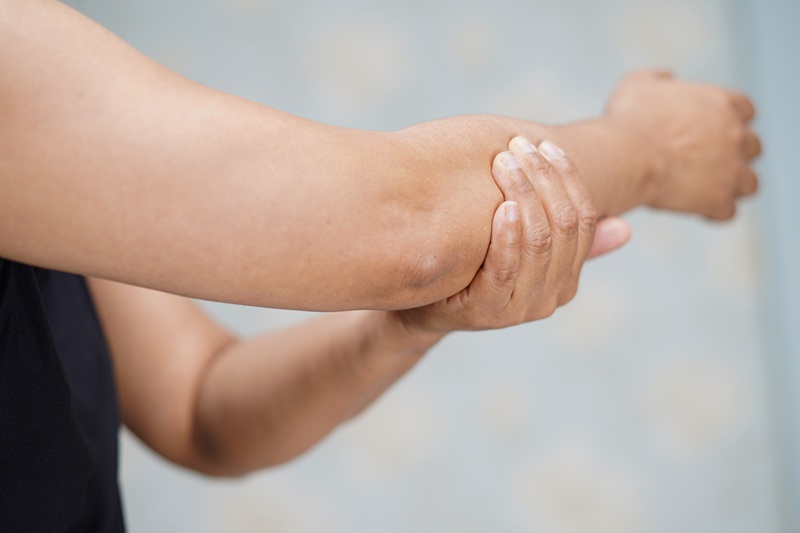
Hip pain can change the way you move long before it stops you from being active. You may shorten your stride, avoid sleeping on one side, or feel discomfort every time you stand after sitting. Rest and stretching may help temporarily, only for the pain to return once you become active again.
Where that pain occurs can provide important clues about what is causing it. Pain along the outside of the hip may involve different muscles and tendons than pain near the front of the hip or groin. When soft tissue is involved, understanding which structures are irritated can help determine whether treatments such as StemWave therapy belong in your recovery plan.
When Hip Pain Comes From the Surrounding Muscles and Tendons

Hip pain does not always originate inside the joint. The muscles and tendons surrounding the hip can become irritated from repetitive strain, overuse, or changes in how you move. Hip flexor strains and gluteal tendinopathy are two examples that can cause persistent pain without advanced joint degeneration.
Where the pain occurs and what aggravates it can provide useful clues. Soft-tissue pain may become more noticeable with specific movements, such as climbing stairs, running, or getting up from a low chair. Joint-related problems can present differently and may require a different approach to evaluation and treatment.
That distinction matters before considering StemWave or any other treatment. Someone dealing with tendon-related hip pain has different needs than someone with significant arthritis or a hip that has already been recommended for replacement.
Common Sources of Chronic Hip Pain From Overuse
Two common sources of chronic, non-arthritic hip pain involve the hip flexors and gluteal tendons. Hip flexor pain treatment often centers on the iliopsoas, the muscle group at the front of your hip that lifts your knee toward your chest. Pain along the outside of the hip, near the bony point you can feel when lying on your side, more often points to the gluteal tendons.
- Iliopsoas or hip flexor strain from repetitive kicking, running uphill, or sudden directional changes
- Gluteal tendinopathy along the outer hip, sometimes worsened by side-sleeping or prolonged sitting
- Hip pain from muscle imbalance, where weak glutes shift extra load onto the hip flexors or lower back
- Hip pain from overuse in runners, cyclists, and dancers who increased training volume quickly
These conditions can overlap. Someone with weak gluteal muscles may develop compensatory tightness in the hip flexors, which then contributes to pain in both areas over time. Similar compensation patterns can contribute to chronic knee pain as well, when weakness or changes in movement place additional stress on the surrounding tissues.
Why “Trochanteric Bursitis” Is Often the Wrong Diagnosis

Outer hip pain has traditionally been called trochanteric bursitis, and you may have heard that term used for your own symptoms. Research over the past decade has shifted this understanding. In some cases, the pain actually originates in the gluteal tendons rather than the bursa. That condition is now more accurately called gluteal tendinopathy or greater trochanteric pain syndrome.
This may seem like a small change in terminology, but it can affect treatment. Bursitis is generally treated as inflammation, which anti-inflammatory medication and rest are meant to calm. A tendon problem responds differently. It often needs an approach that supports tissue remodeling and appropriate loading, rather than rest alone. This may explain why some patients do not improve much with a bursitis-focused approach.
How Muscle Imbalance and Compensation Contribute to Hip Pain
Hip pain can sometimes develop because of what is happening elsewhere in the movement chain. Weakness in one muscle group can shift extra demand onto neighboring structures, which may eventually become painful themselves. This type of movement compensation can contribute to chronic pain in other areas of the body as well, and the same pattern can affect the muscles and tendons surrounding the hip.
For example, weak glutes can force the hip flexors to work harder during walking and running. This gradually overloads a muscle group that was never meant to carry that much of the load. That is why treatment may need to look beyond the painful area and consider the movement patterns contributing to the extra strain.
What the Research Shows About Shockwave Therapy for Hip Pain
Greater trochanteric pain syndrome is common. It affects an estimated 17.6 percent of adults between the ages of 50 and 79, with a higher rate among women. A systematic review of eight randomized trials involving 754 patients found that shockwave therapy improved pain and function in this population. For patients considering their options, this research also provides useful evidence for a non-invasive approach to greater trochanteric pain syndrome.
Research specific to hip flexor and iliopsoas tendon pain is less extensive than for the outer hip. The same tissue-level mechanism, increased circulation and stimulation of cellular repair activity, may also help address discomfort and limited mobility associated with post-surgical scar tissue elsewhere in the body. Your response depends on how long the pain has been present and whether an underlying muscle imbalance is still active.
What a Treatment Plan Might Involve
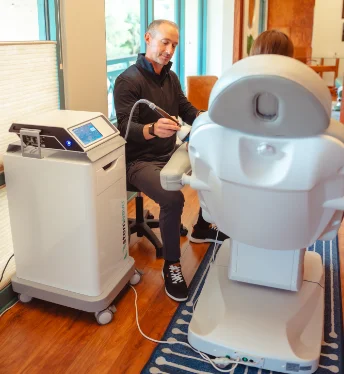
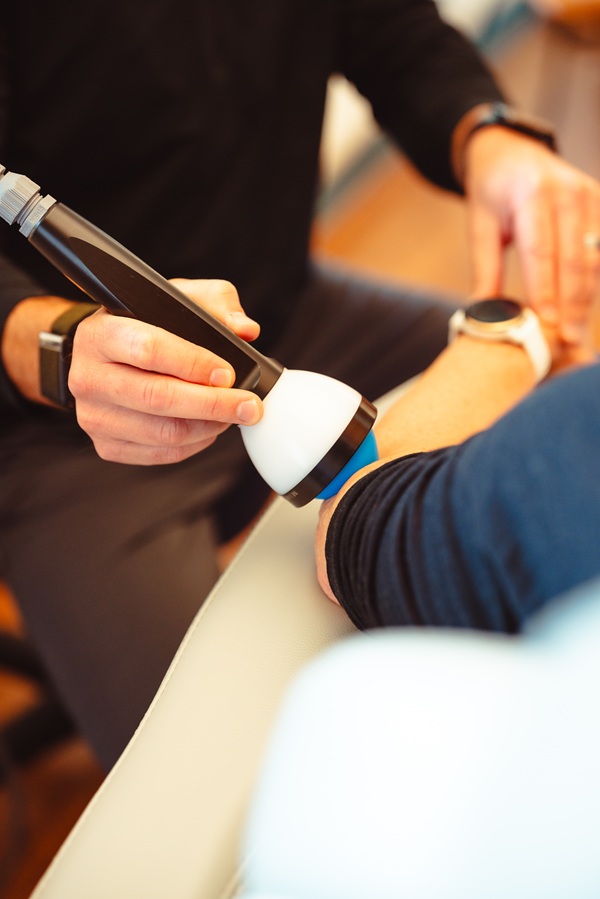
A session typically involves a handheld applicator delivering acoustic pulses to the affected tendon, usually taking 10 to 20 minutes. Most people resume normal activity immediately afterward.
- An evaluation to identify whether the pain originates from the hip flexors, gluteal tendons, or both
- A series of sessions, often spaced about a week apart, over several weeks
- Strengthening work targeted at the muscle group that is underperforming
- Reassessment to confirm the imbalance driving the pain is actually improving
Treatment usually works best alongside a strengthening program rather than as a standalone step, since the tendon pain and the underlying imbalance tend to improve together rather than separately. Pairing StemWave with chiropractic care can allow treatment to address the painful tissue while also looking at joint mobility and movement patterns that may be contributing to the problem.
For runners and cyclists specifically, a return to training is usually staged rather than immediate. Building back mileage or intensity too quickly after the pain improves is a common way symptoms return, particularly if the muscle imbalance that contributed to the original strain has not fully resolved.
When Hip Pain Needs a Different Kind of Evaluation
Not every case of hip pain fits the pattern described here. Pain that is worse with weight-bearing rather than specific movements may point toward the joint itself rather than the surrounding tendons. The same is true of pain accompanied by significant stiffness, or pain present for years without a clear muscular trigger. That is worth confirming through an evaluation rather than assuming.
If the pain appears to involve a tendon or surrounding soft tissue, non-invasive treatment options may be appropriate to consider. Joint-level degeneration can require a different approach, which is why identifying the structures involved matters before deciding what comes next.
Talk to Someone About Your Hip Pain
Hip pain that keeps returning despite rest is usually telling you something about what is actually being overloaded, not just where it hurts. Identifying whether that is the hip flexors, the gluteal tendons, or an imbalance between the two is what determines which treatment approach is likely to hold.
Getting that answer usually takes more than guessing based on where the pain is felt, since hip pain from one structure often mimics pain from another. A proper evaluation looks at how you move, not just where you point.
If your hip pain has not improved with rest and stretching, Crystal Springs Chiropractic can evaluate what is driving it. Together, we can talk through whether StemWave therapy fits your situation.
Still Working Around the Same Hip Pain?
If hip pain keeps returning despite rest, stretching, or changes in activity, it may be time to look more closely at what is contributing to it. Crystal Springs Chiropractic can evaluate your movement and discuss whether StemWave may fit into your treatment plan.
Schedule an Appointment